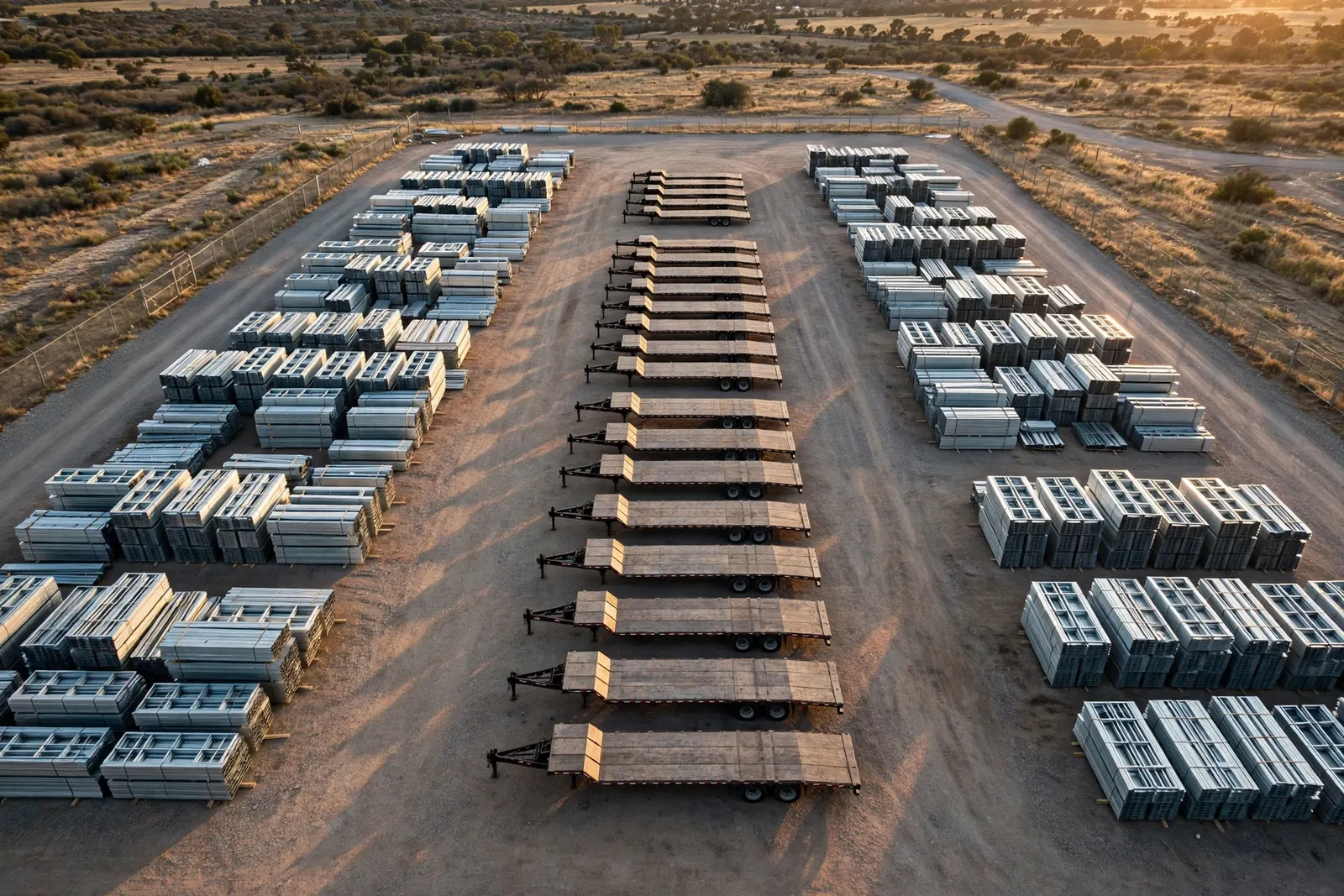
"Where does it come from?" is one of the best questions a builder or developer can ask a framing system, and it deserves a better answer than a flag on a brochure. Panels are physical. They are manufactured somewhere, loaded somewhere, and hauled to your site from somewhere — and that geography can matter to how a project is planned. So this channel keeps the map the way we think it should be kept: named facilities, attributed updates, and corrections when the map changes. Everything below reflects the latest facility update shared with us through Jared Rothenberger's NexGen partner channel.
Producing today
Three NexGen facilities are live:
- Linden, Utah — the Mountain West anchor.
- Pearl River, Louisiana — the Gulf South anchor.
- Boston, Massachusetts — the Northeast anchor.
Utah, the Gulf, and New England: the current map already spans the country's three vertical bands, which is part of why projects in very different regions can have a sensible supply conversation at all.
Announced for 2026
The same update names three additions in progress for 2026:
- Sparks, Nevada — deepening the West.
- Southern Arizona — a Southwest presence.
- Fort Worth, Texas — the middle of the country, filled in.
Read the tense carefully, because we wrote it carefully: these are announced and in progress, per the partner-channel update — not plants we are claiming produce panels today. As each comes online, this post and its map get updated. A supply story you can stand behind is one that knows the difference between "is" and "is coming," and says which is which.
Why the map belongs in your fit review
For an individual project, the useful question is specific: which facility would produce this project's panels, and what does that mean for delivery planning to this site? Freight distance is a real planning input — one of the ordinary, unglamorous facts that separates a workable proposal from a hopeful one. That is why the supply picture is part of the project-fit review rather than a footnote after it. The review looks at your project's location against the map as it stands at that moment, with the production and delivery picture discussed in the open. If the map does not serve your project well, that is a fit finding — exactly the kind of thing a fit review exists to surface before commitments are made.
It also changes the questions a project team gets to ask. Instead of wondering whether a manufactured framing system can reach a site at all, the conversation becomes which facility, which production sequence, and what the delivery plan assumes about your site's access and staging. Those are planning questions with real answers — the kind a fit review exists to put on paper before anyone commits a building to a framing path.
The standard we hold this story to
Domestic manufacturing is a claim that gets abused across this industry, which is why we would rather under-tell it. Our standard: facilities are named only when they come from NexGen's own updates through the partner channel; announced plants are labeled announced; and when NexGen publishes more — capacity, timing, further expansion — we amplify it attributed, not embroidered. Build with a supply story you can stand behind. This map is ours, as it stands today, and we will keep it current.